No more solo treks. Guides mandatory from April 1
Come April 1, solo or free independent trekkers have to mandatorily hire a guide or a porter before setting off to Nepal’s mountains.
Some say the rule would restrict trekkers, particularly those coming to Nepal for adventure in the mountains.
Nepal Tourism Board, the country’s national tourism promotion body, which includes trekking and mountaineering associations, on Thursday, decided to make a guide mandatory for solo or free independent trekkers (FITs) due to increasing safety concerns.
Nepal Tourism Board has been mandated to issue the trekkers information management systems (TIMS) cards before they start trekking.
For trekkers from third countries, other than South Asia, the fee for TIMS card or the trekking permit has hiked to Rs2,000, from Rs1,000 per person. It used to cost Rs2,000 for the FITs. The new fee too would come into effect from April 1.
Similarly, for South Asian trekkers, the fee for group trekkers is Rs300 and Rs600 for FITs. Now, both will have to pay Rs1,000.
The apex body of the country’s trekking agencies had announced that solo trekkers would have to take along a guide from September 1, 2012, as per government orders. However, it was forced to backtrack after the Tourism Ministry said it had not issued any such directive.
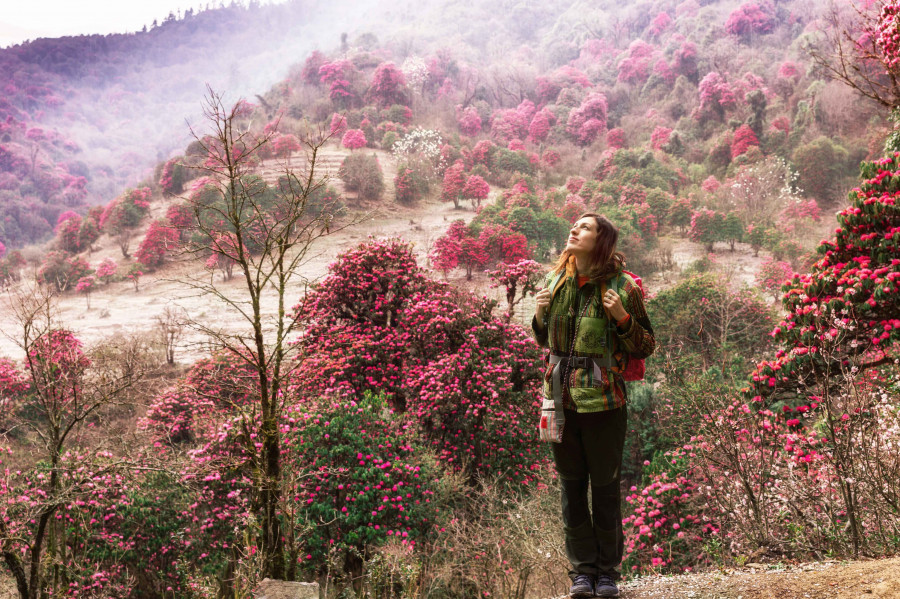 Nepal’s Private Traven and tourism bodies have been lobbying for a one-trekker, one-guide system, since 2012.
Debate Over Mandatory Trekking Guides in Nepal: Safety vs. Freedom
“We have estimated that roughly 40,000 Nepalis will get new employment if the rule is enforced,” said Bastola.
According to him, for day-long trekking, the guide’s fee ranges from $25 to $50.
However, the fee is much higher on the long and difficult trekking routes—ranging from $100 to $200 a day.
“The one-trekker, one-guide policy, however, will not significantly affect the trekker’s budget,” said Bastola. “It will generate jobs. That’s good for Nepal’s economy.”
Due to a lack of employment opportunities at home, Nepal has expected to see nearly 1 million youths leaving the country for foreign employment this fiscal year ending mid-July.
The tourism industry is also struggling. Based on forward-looking scenarios for 2023, international tourist arrivals could reach 60 percent of pre-pandemic levels this year.
In 2019, before the Covid pandemic struck, Nepal received 1.19 million foreign tourists.
Among them, more than 300,000 were trekkers—with the Annapurna area receiving the highest 181,746 trekkers, followed by 57,289 trekkers in the Everest region, according to government statistics.
According to Bastola, since the trekking companies will become liable for the safety, including search and rescue of the missing trekkers and their assets, it would boost the confidence of the trekkers. “Every year, some 10 to 15 trekkers go missing, mostly FITs, and this is serious.”